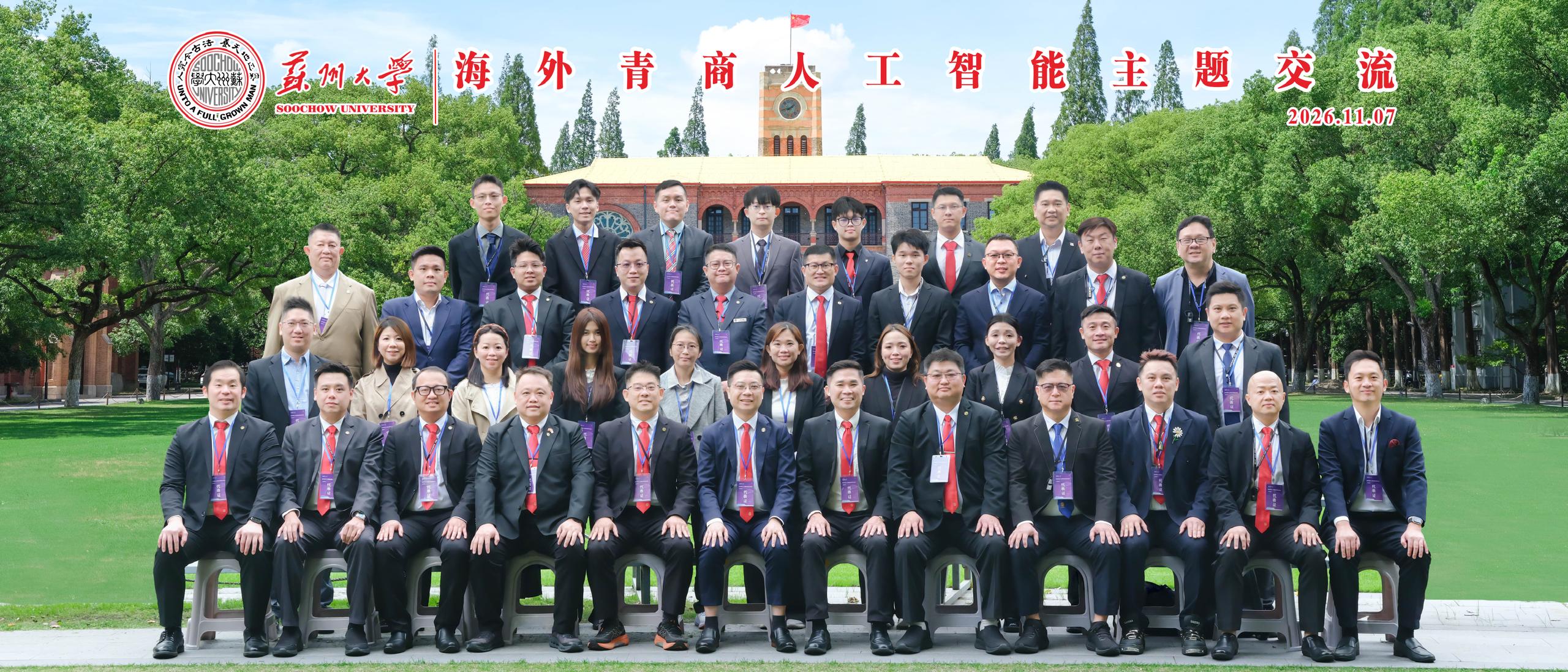
Early this November, I joined 44 others for a four-day AI training programme in Suzhou, organised by ACCCIM and run jointly with Soochow University. The delegation drew young entrepreneurs’ committee members from several different states, plus a handful of people who weren’t ACCCIM members at all. The honest reason I went: I’ve been using AI aggressively to run Lexis Yoga as a one-person company, and I wanted to actually meet and learn from other people doing something similar, not just read about it online. I’ve been recording the whole experiment on kkecommerce.com anyway, so this was exactly the kind of trip worth showing up for.
I didn’t go in completely alone. Two young ladies from PCCCI came along too, so the whole Perak team was just the three of us. Beyond our own group, I didn’t know a single soul, and once I actually met everyone else, the mix was funny: construction contractors, lawyers, property developers, manufacturers, and then me, trying to sell yoga mats, all sitting in the same lecture hall to “learn AI.” I was braced for a stiff, formal few days. That lasted about an hour.
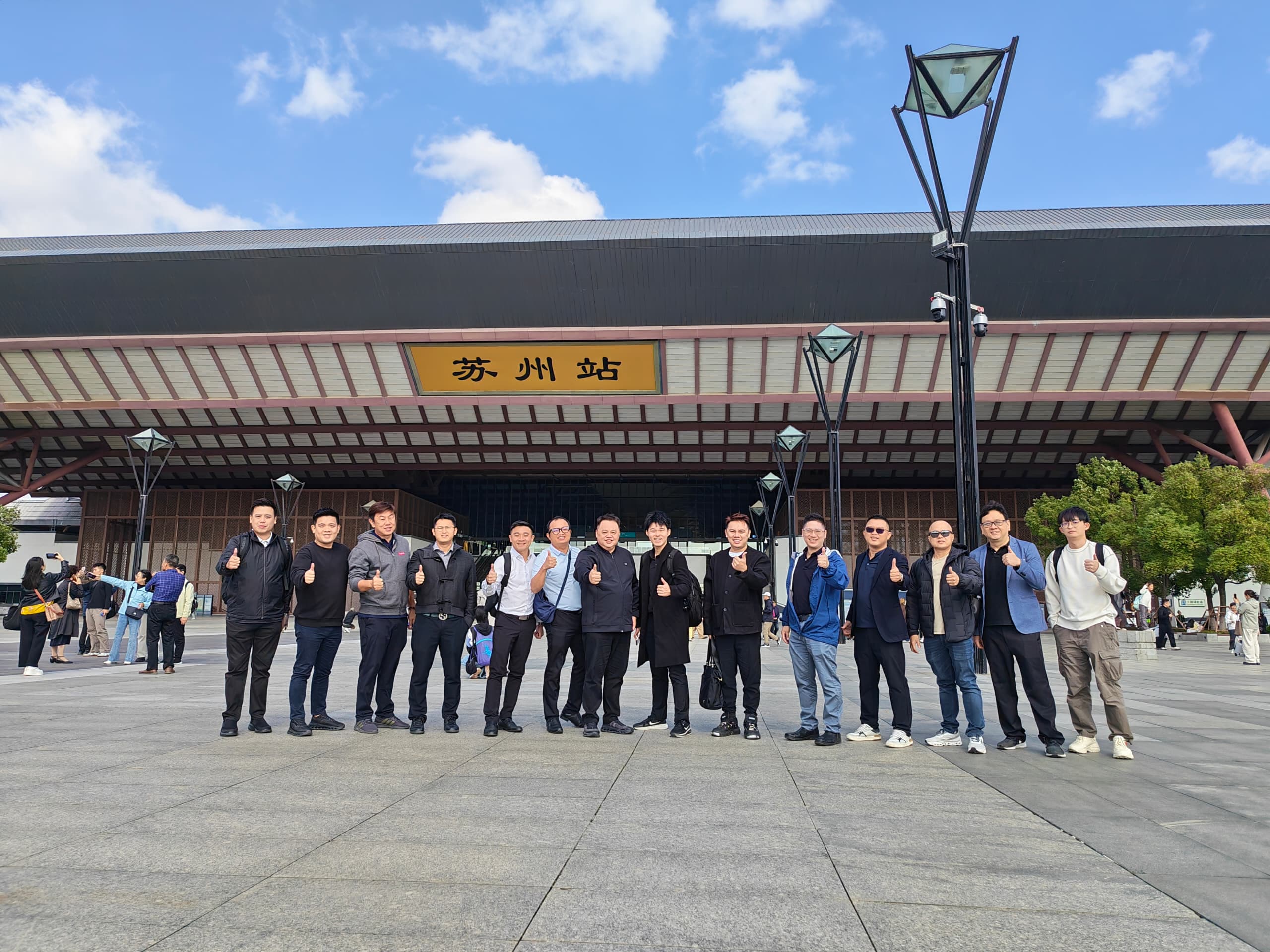
We landed at Suzhou’s train station, and one of the committee members had already sorted boat tickets. Instead of a bus, we cruised straight to the hotel by river. Lunch was the kind of spread a host puts on when they actually want you to feel welcome, not just fed.
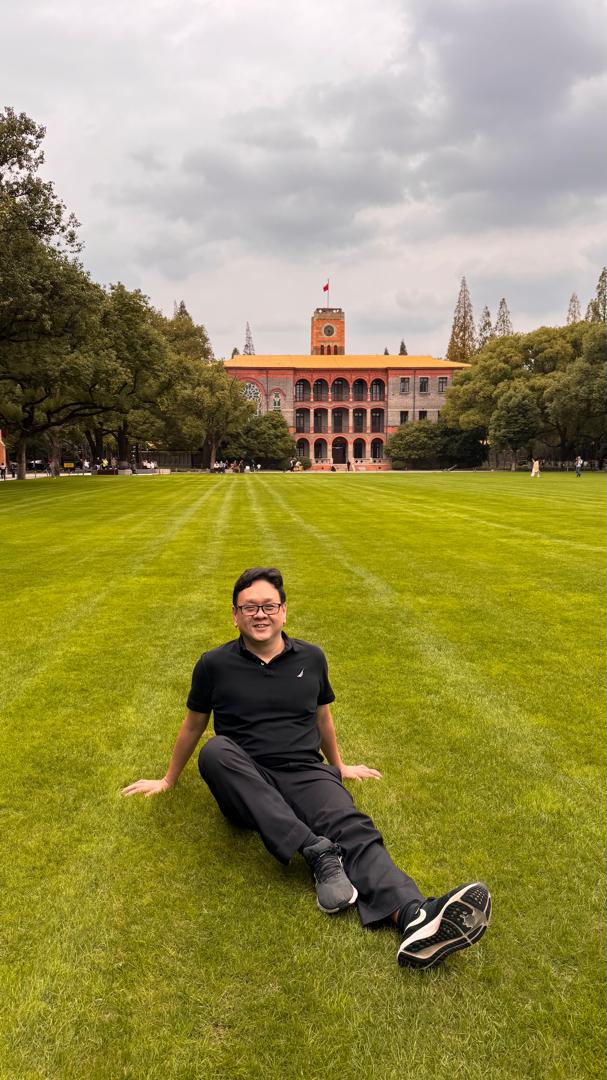
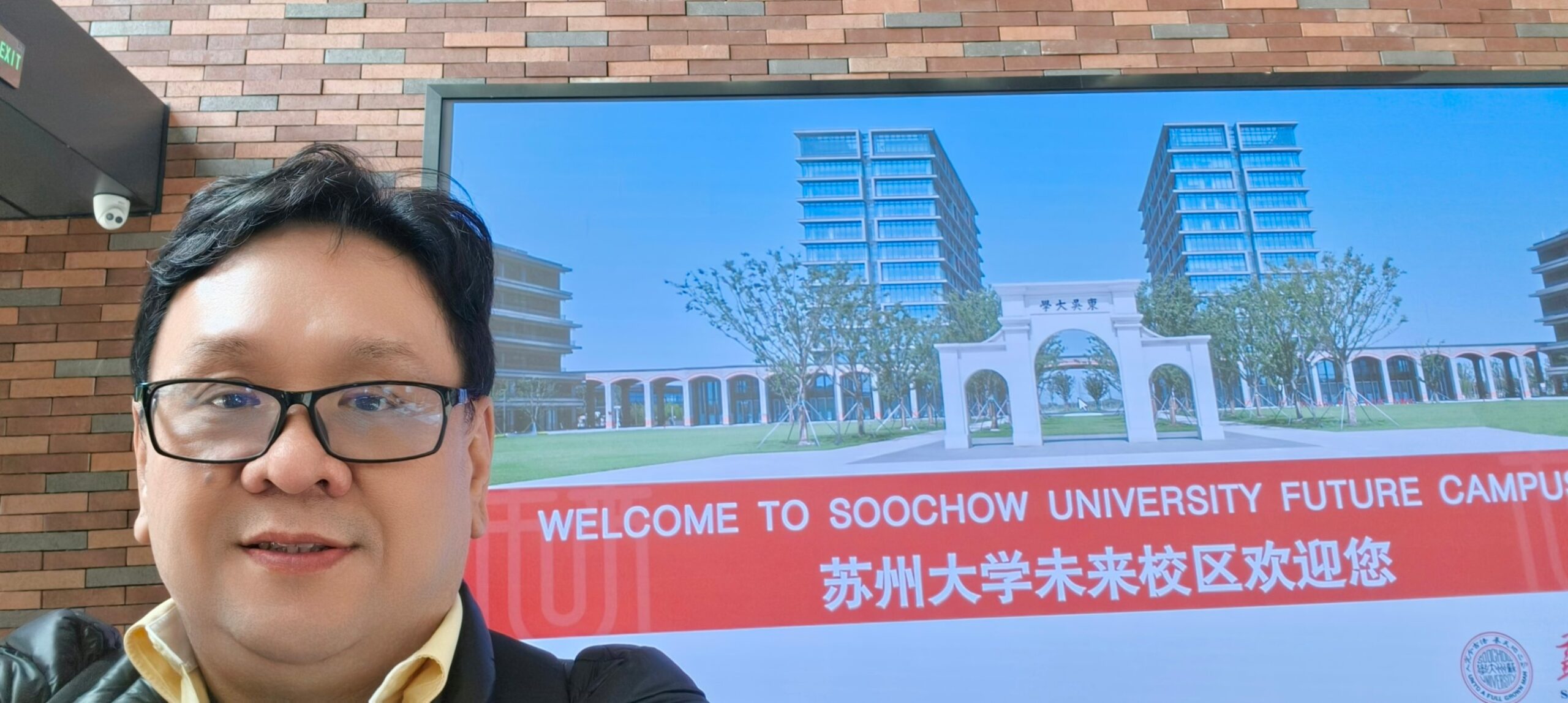
After that we walked the Soochow University campus properly: old courtyards, grand halls, more history per square metre than most buildings I’ve set foot in. The university had a full welcome ceremony waiting for us too, in one of those old, solemn, genuinely impressive halls. Group photo, dinner at one of Suzhou’s best-known restaurants, and a committee and secretariat team so down-to-earth about the whole thing that I went to bed actually looking forward to a lecture.
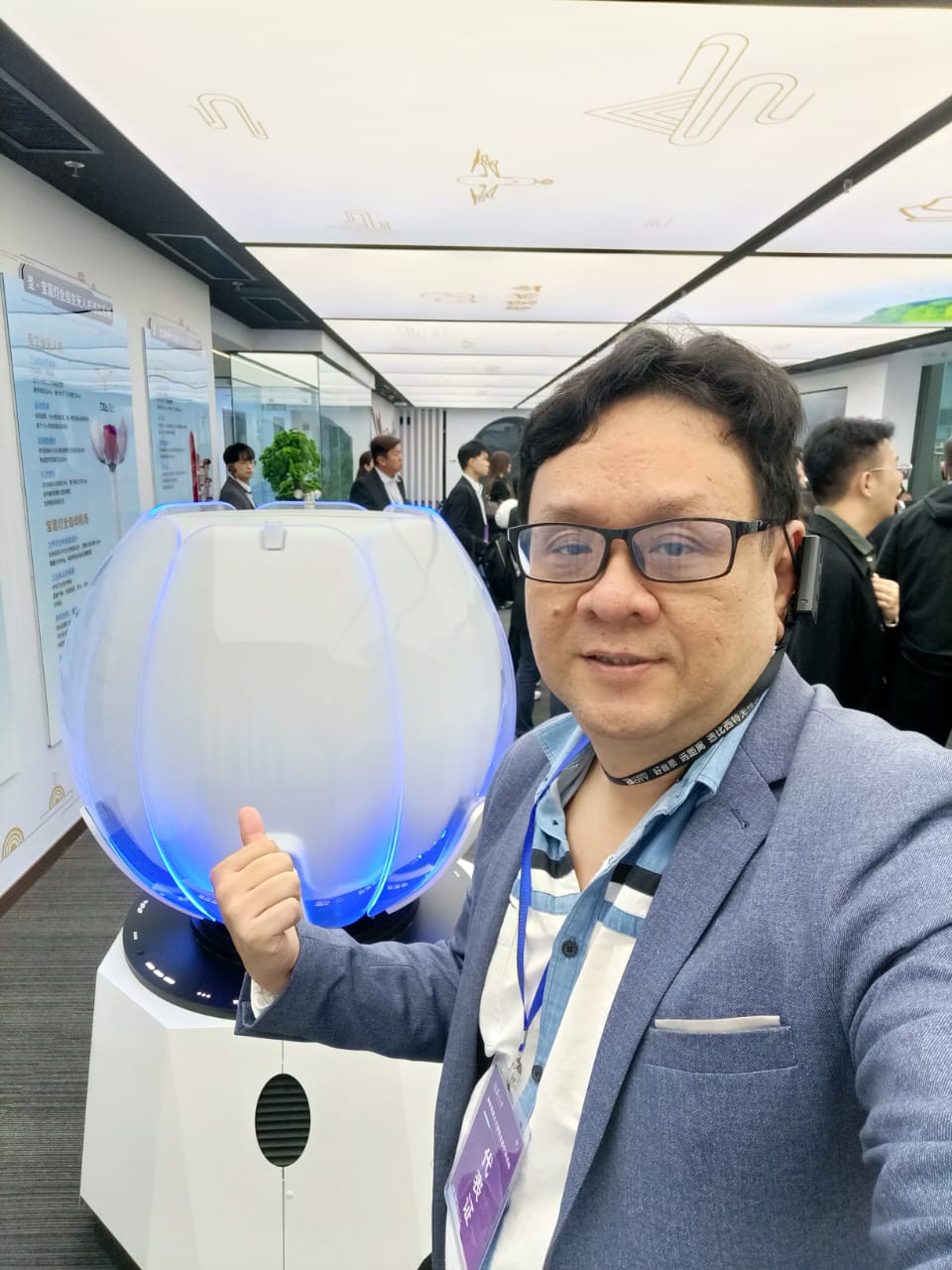
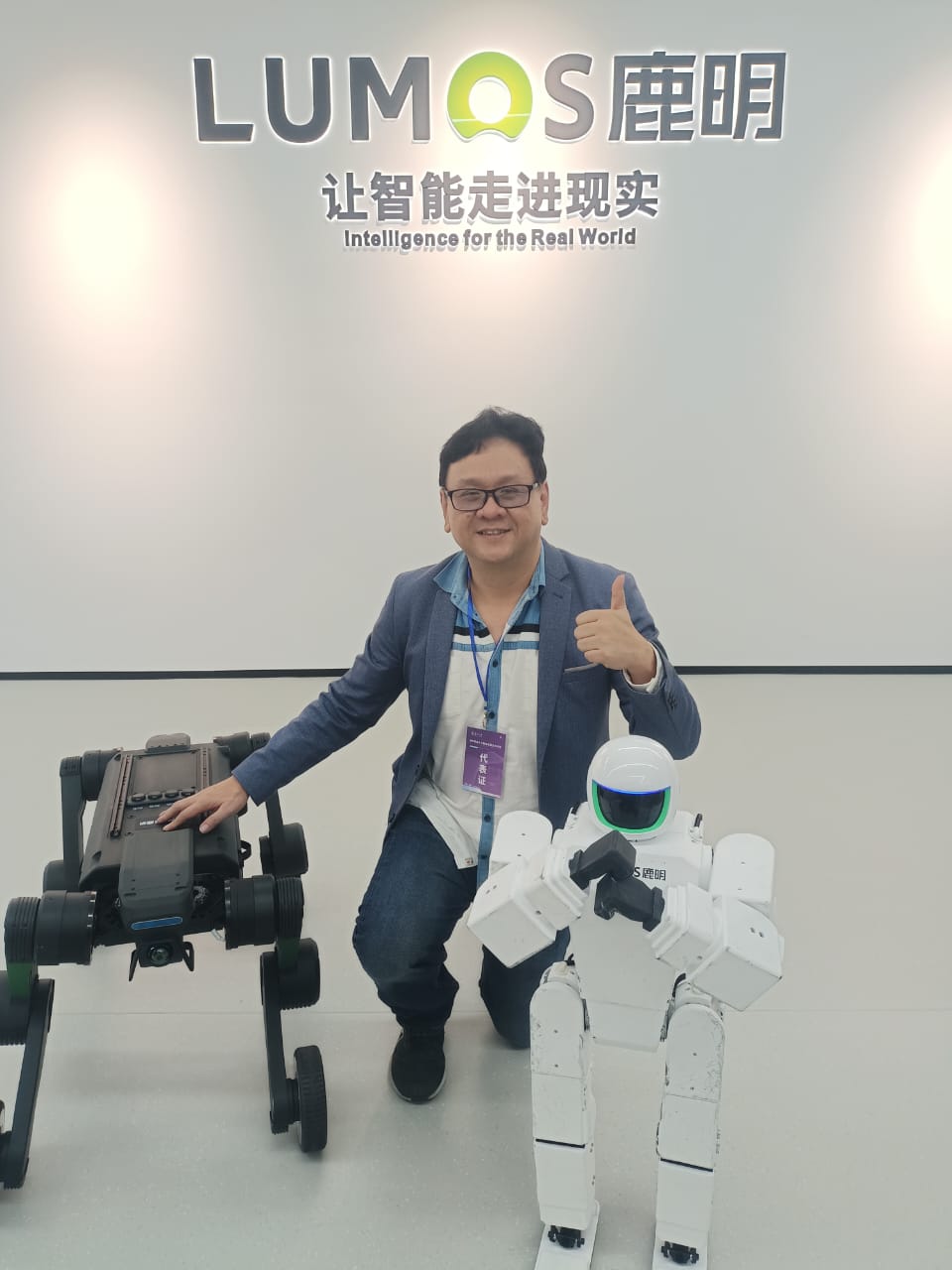
Day two was a full day of lectures and company visits, the kind of material that’s easy to admire and hard to apply if you’re not sitting in the room. The one moment that stuck regardless: watching a drone lift out of a lotus-shaped docking station at a company called i-Kingtec, fly up several floors on its own, and film us through a window. Then a robotics lab called Lumos, where an award-winning robot danced, stacked boxes, screwed in parts and collected data, all in the same demo, and let us take the controls ourselves for a few minutes. I am now fully convinced a robot is better than me at screwing things in.
Our second lecture day, at Soochow University’s School of Future Science and Engineering, is where the trip stopped being generally interesting and got personal.
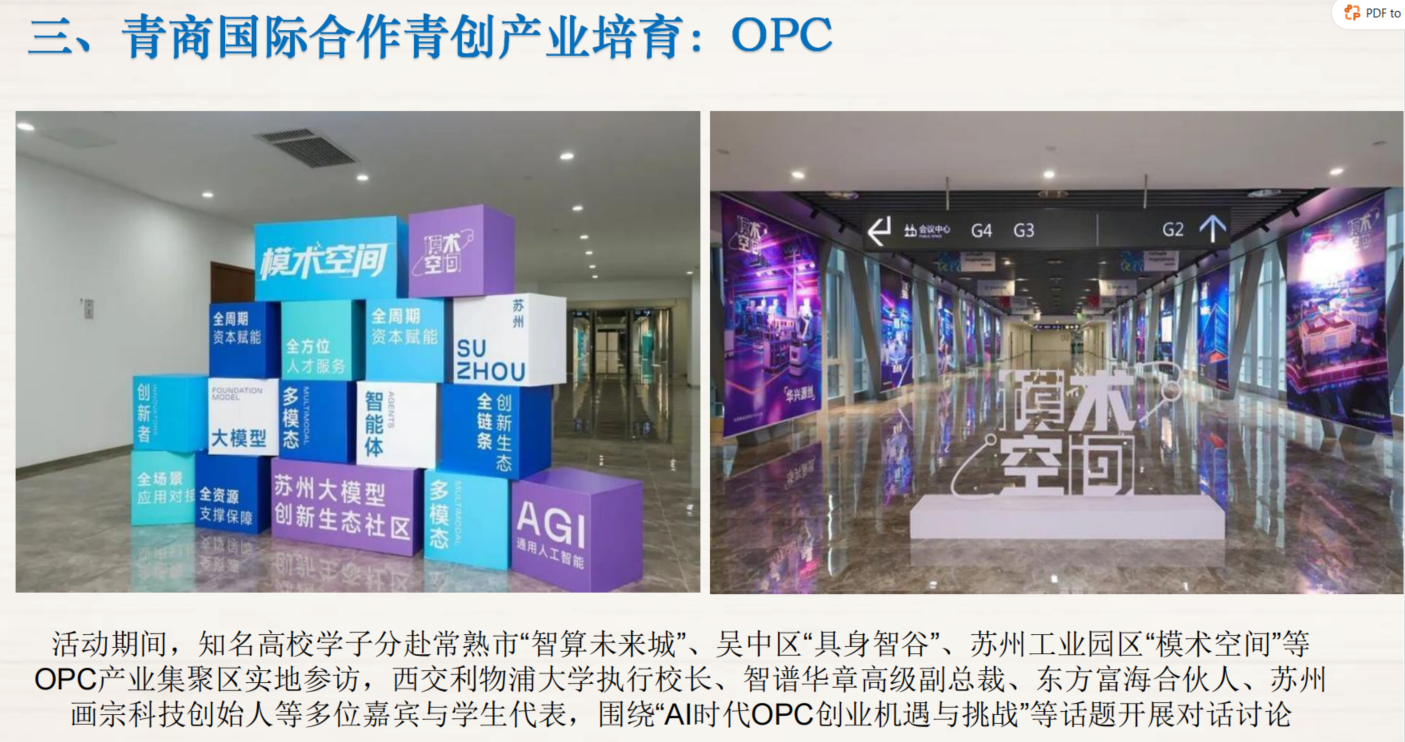
Buried in a slide about where AI is heading were three letters I’d heard somewhere before but never really looked into: OPC. One-person company. I’d picked it up in passing, the way you half-notice a buzzword without digging into what it actually means. This lecture is where it properly clicked.
The lecturer traced it back to a 2024 prediction from Sam Altman, that AI would eventually make a “one-person unicorn” possible. A company worth a billion dollars, run by one person, with AI doing the rest. In 2025, Jiangsu formalised it at an AI conference in Suzhou, officially defining the one-person company (OPC) and the idea of “one person plus AI employees equals a company.” By 2026, it had become actual government policy.
Suzhou, Shanghai and Nanjing are now competing to build themselves into the preferred city for OPC entrepreneurs, with funding, computing subsidies, dedicated OPC communities and full support pipelines. Suzhou’s mayor was quoted on it directly: let having an idea be enough to start, and let a one-person company compete globally.
What a One-Person Company Actually Means
The definition is the part that landed hardest for me. OPC isn’t just a sole proprietorship with a fancier name. It rests on four things. First, a legal structure that lets a solo founder operate with limited liability instead of personal risk. Second, an AI tool chain that gives one person the output that used to take a team: content, data analysis, customer handling, all automated. Third, a shift in what skills even matter, from one fixed job description to a “T-shaped” person working across domains with AI doing the rest. Fourth, a value model built around what AI can’t replace: your own judgment, taste and decisions, while AI absorbs everything standardised.
There was a line from Soochow University’s president that summed it up better than I could. Once, a person’s territory was the radius of their footsteps. Today, with AI, a person’s universe is as wide as their imagination. The slide traced the whole arc in one image: the travelling peddler who reached people on foot, the sole trader who reached more by van, the e-commerce seller who reached more again through the internet, and now the OPC founder, reaching further still on AI. One person, an army, was the exact phrase used.
They put a real face to it: Qin Wenshan, a former mid-level manager at a state-owned railway company. He’s now one of China’s top AI content creators, with over 350,000 followers and his own registered company, built around himself and a small team instead of a department.
I sat through that slide thinking about Lexis Yoga and how I already work. Claude and ChatGPT complement each other more than compete. For a product video, I might start with a real photo of the mat, get ChatGPT to turn it into the opening image, then ask Claude to help write the prompt for Kling. Kling generates the actual video clips, and I stitch them together myself in Jianying.
Claude also pulls my KPI numbers from Metricool and Google Analytics, and Google’s own AI quietly helps with some of the Drive and email work in between. I’m still the one who checks whether the pink mat on screen looks like the real thing, decides what actually goes out, and looks at the numbers afterward to judge if it was worth the time.
I didn’t learn a new strategy in that lecture. I learned there’s a proper name and a framework for the one I’m already running. An entire city is now writing policy to make more people do exactly this.
That’s oddly reassuring for a 49-year-old running his third business mostly alone. I’d been quietly treating “it’s just me, with a lot of AI” as a limitation I was working around. Turns out it’s a real model, with a name, a growth path, and apparently government incubators behind it. It also gives me a sharper question to ask about Lexis Yoga going forward: not “should I hire,” but “which part of this still needs a human, and which part is standardised enough that AI should just take it over.” That’s closer to how an OPC is actually supposed to run, not an accident of being a one-man show.
The lonelier side of OPC doesn’t show up on a policy slide, though. Running a one-man company means most of my actual problem-solving happens in conversation with AI, not with another person. Claude is genuinely my first call when something needs figuring out, which is still a strange thing to say out loud.
So I’ve started looking for OPC communities here in Malaysia, hoping to trade notes with people living the same setup. What I’ve found so far leans heavily toward online products and digital solutions: course creators, app builders, content businesses. Useful, but not quite my situation: a plain SME selling a physical product, trying to run itself as a one-person company with AI doing the heavy lifting. That sounds like a narrow, almost boring problem to have. It isn’t. A lot of Malaysian SMEs are quietly worried about exactly this right now, whether the business can survive as things keep changing around it. If that’s your situation too, physical product and all, I’d genuinely like to hear from you.

That last afternoon came with its own surprise: a state level banquet, and in between the many exquisite dishes, a plate of Yangcheng Lake hairy crabs, specially arranged by the host. Each one weighed a hefty six liang. I picked one male and one female, and the roe alone made the whole thing worth it. Nobody told me before the trip that it came with a perk like this. It is one of the nice surprises of joining an ACCCIM event: VIP treatment you never expected.
Most of what we saw in Suzhou operates at a scale no SME I know will ever touch. I’m not building anything close to it for Lexis Yoga. But one reflection applies just as well to a business my size: an OPC is not a temporary model for a traditional business that is shrinking and forced to change. It’s increasingly treated, in policy and in practice, as its own legitimate model. This has helped set my direction and given my confidence a real boost, because I know I’m not alone in using this business model. My one hope now is to connect with more businesses and organisations actively venturing into the OPC model, and learn from them.
Thanks to ACCCIM and Soochow University for putting this together. We paid a token RM1,000 each for the trip, but going by the perks and arrangements we received, the value was far beyond that. I asked the vice president of the ACCCIM youth committee about it, and he explained it to me personally: our payment only covered part of what ACCCIM spent to arrange the trip and to have three secretariat staff serving us the whole way.
The rest came from the generosity of our Chinese hosts, who underwrote the cost of our visits and arranged for two deans from Soochow University to share their wisdom with us, on top of sending a number of their own staff along just to make sure everything went right for us.
If a trip like this comes up and you’re a youth in Malaysia (below 45 years), go. I’m aging out of the “youth” part of youth member soon, and this is exactly the kind of thing I’ll miss being eligible for. How a 49-year-old uncle like me squeezed into this trip is a story for another day 🙂